
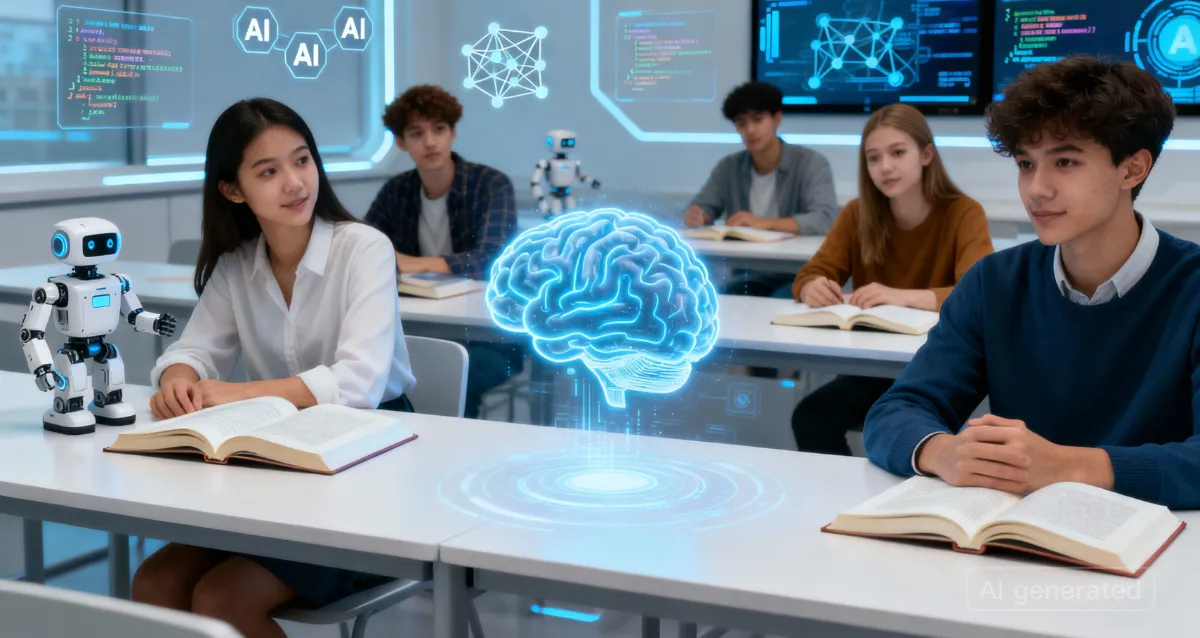
BSc in Artificial Intelligence is a 3-year undergraduate program that teaches students how to build intelligent computer systems that can think, learn, and make decisions like humans. The course includes subjects such as:
-
Machine Learning
-
Data Science
-
Neural Networks
-
Programming (Python, Java, C++)
-
Robotics and Automation
-
Deep Learning
The focus of this course is on developing software and algorithms that mimic human intelligence.
Unlike general computer science degrees, BSc in Artificial Intelligence covers both theoretical concepts and hands-on projects. Students learn how AI is used in real-world applications like:
-
Self-driving cars
-
Speech recognition (Alexa, Siri)
-
Face detection and biometrics
-
Medical diagnosis
-
Banking fraud detection
In short, this course prepares students for a future where AI is involved in every industry.
Eligibility Criteria for BSc in Artificial Intelligence
To apply for BSc in AI, a student must meet the following eligibility requirements:
-
Must have completed 10+2 (higher secondary) from a recognized board.
-
Physics, Mathematics, or Computer Science are preferred subjects, though many colleges accept students from any science stream.
-
Minimum marks required range from 50 percent to 65 percent (depending on the college).
Some universities may also consider students from commerce or arts if they meet entrance exam criteria.
Admission Process
Admission to bsc in artificial intelligence takes place in two ways:
1. Merit-Based (Direct Admission)
Many private and some government universities offer direct admission based on Class 12 marks. Students just need to register on the university website, fill out the application form, and upload documents.
2. Entrance Exam-Based Admission
Top universities conduct entrance exams to shortlist students. Some popular entrance exams include:
-
JEE Main (for universities where AI is part of engineering programs)
-
CUET (Central University Entrance Test)
-
University-level entrance tests (example: Amity, LPU, Chandigarh University)
After the exam, students go through counselling, document verification, and fee submission.
Subjects and Semester-Wise Syllabus
The syllabus may vary between universities, but most colleges follow this structure:
Semester 1
-
Basic Mathematics
-
Fundamentals of Programming (Python)
-
Introduction to Artificial Intelligence
-
Communication Skills
Semester 2
-
Data Structures and Algorithms
-
Computer Organization
-
Probability and Statistics
-
Object-Oriented Programming (Java)
Semester 3
-
Database Management Systems
-
Machine Learning Basics
-
Operating Systems
-
Soft Skills and Technical Report Writing
Semester 4
-
Neural Networks
-
Data Mining and Analytics
-
Cloud Computing
-
Mini Project (AI based)
Semester 5
-
Deep Learning
-
Natural Language Processing (NLP)
-
Big Data Analytics
-
Research Methodology
Semester 6
-
Robotics and Computer Vision
-
AI Ethics and Cybersecurity
-
Final Project or Internship
This curriculum helps students understand theory while also gaining practical skills through lab work, coding assignments, and real-time projects.
Skills Required for BSc in AI
Students pursuing bsc in artificial intelligence benefit from the following skills:
-
Logical thinking
-
Problem-solving mindset
-
Basic programming knowledge
-
Mathematics and analytical ability
-
Interest in technology and computers
Even if you do not know programming yet, you can learn during the course.
Top Colleges and Universities Offering BSc in Artificial Intelligence
Top Colleges in India
|
College / University |
Location |
Admission Type |
|
IITs (AI-specific courses under BTech) |
Multiple cities |
JEE Main + JEE Advanced |
|
Chandigarh University |
Punjab |
Entrance / Merit |
|
Amity University |
Multiple cities |
Entrance / Merit |
|
Jain University |
Bengaluru |
Merit |
|
Sharda University |
Greater Noida |
Entrance |
Many private colleges offer reasonable fees, and scholarships are available for high-merit students.
Top Colleges Abroad
|
University |
Country |
Notable Feature |
|
MIT (Massachusetts Institute of Technology) |
USA |
Best global AI research |
|
Stanford University |
USA |
Industry partnerships |
|
University of Oxford |
UK |
AI specialization |
|
University of Toronto |
Canada |
Pioneer in deep learning |
Studying abroad gives exposure to advanced AI research, but costs are higher.
Career Options After BSc in Artificial Intelligence
Graduates have multiple opportunities in the IT sector and research-based organizations. Some common industries hiring AI graduates include:
-
IT and Software
-
Healthcare and Medical Research
-
Banking and Finance (fraud detection, automation)
-
E-commerce and Retail
-
Manufacturing and Robotics
-
Research Labs and Startups
Job opportunities are not limited to India. AI professionals are in global demand.
Job Roles and Expected Salary After BSc in AI
Here are popular job roles:
|
Job Role |
Average Salary (INR per annum) |
|
Machine Learning Engineer |
6 LPA – 20 LPA |
|
Data Scientist |
8 LPA – 25 LPA |
|
AI Engineer |
6 LPA – 22 LPA |
|
Research Analyst |
4 LPA – 12 LPA |
|
Robotics Engineer |
7 LPA – 18 LPA |
|
NLP Engineer |
8 LPA – 20 LPA |
Entry-level salaries are high compared to many other fields because AI skills are rare and valuable.
With experience, AI experts can earn salaries exceeding 50 LPA or higher, especially in technology companies in the United States, Europe, and Singapore.
Future Scope of BSc in Artificial Intelligence (2025 and Beyond)
AI is not a trend. It is becoming a foundation of every industry.
Key future trends include:
-
Generative AI (like ChatGPT and image-generating tools)
-
AI in healthcare diagnostics
-
AI-powered automation for businesses
-
Robotics and self-driving cars
-
AI-based cybersecurity and threat analysis
According to global reports, AI is expected to create over 90 million jobs by 2030.
This means students completing bsc in artificial intelligence today are entering a field with massive future demand.
Conclusion
BSc in Artificial Intelligence is an excellent course for students who are passionate about computers, programming, and future technology. It offers strong career growth, high-paying jobs, and endless opportunities across industries.
You learn how intelligent systems work, build real AI models, and apply your skills to solve real problems. Whether you want to work in a company or pursue higher research (like MSc AI or Ph.D.), this course opens the door to multiple possibilities.
If you want a degree that prepares you for the future, BSc in Artificial Intelligence is one of the best choices.
FAQs
1. Is BSc in Artificial Intelligence better than BTech in AI?
Both courses are good. BTech focuses more on engineering and hardware, while BSc focuses more on programming and research.
2. Can commerce or arts students apply for the course?
Some universities allow students without science background, but most prefer mathematics or computer science.
3. What is the starting salary after BSc in AI?
Fresh graduates earn between 4 to 8 LPA depending on skills and company.
4. Do I need to know coding before joining BSc AI?
No. Basic programming will be taught in the first semester.
5. Which higher studies options are available after BSc AI?
You can pursue MSc Artificial Intelligence, MBA Data Science, or Research-based programs.
