
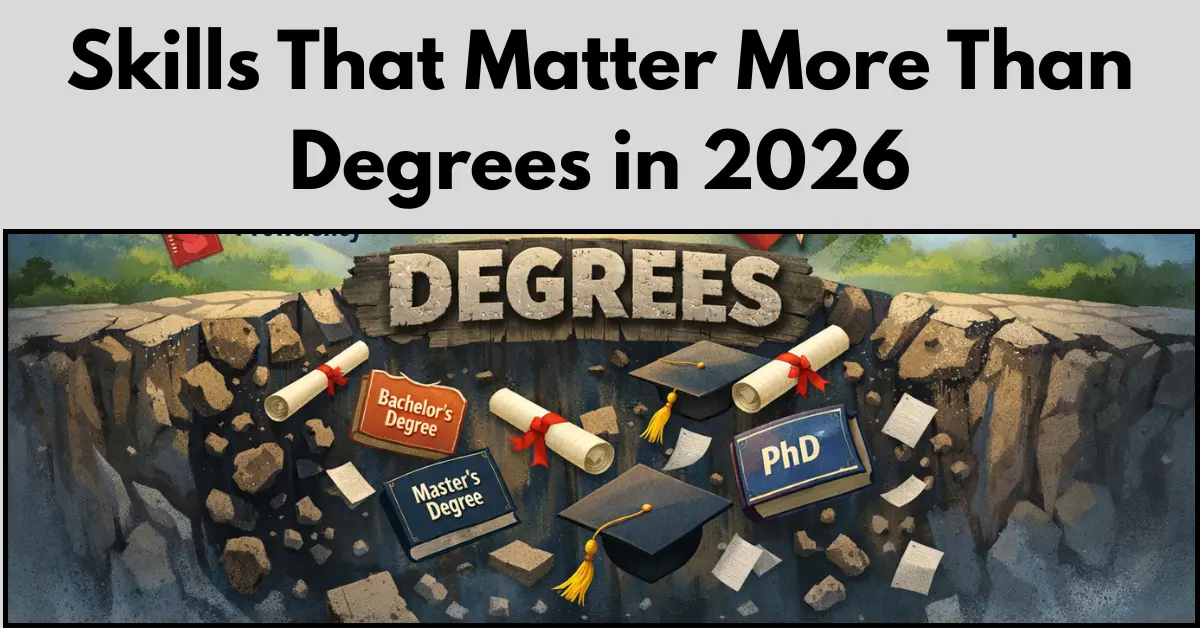
For decades, degrees were treated as the ultimate ticket to success. A good college, a recognized course, and a certificate were supposed to guarantee a stable career. But as we step into 2026, that belief is rapidly losing relevance. Today’s job market is no longer impressed by what you studied it’s focused on what you can actually do.
Across industries, employers are shifting their priorities from academic credentials to practical, real-world skills. The reason is simple: businesses need problem-solvers, not just degree holders.
The Changing Reality of the Job Market
Technology, automation, and AI have transformed how work is done. Many roles that existed a decade ago are either evolving or disappearing, while new ones are being created faster than universities can update their syllabi. As a result, companies are hiring people who can adapt quickly, learn continuously, and deliver results from day one.
A degree might get your resume noticed, but skills decide whether you get hired—and whether you stay relevant.
Communication and People Skills
In 2026, the ability to communicate clearly stands above most technical qualifications. Whether it’s pitching an idea, writing an email, leading a team, or dealing with clients, strong communication skills are essential. Employers value people who can express thoughts confidently, listen actively, and collaborate effectively. No degree can replace emotional intelligence, empathy, and clarity in communication.
Digital and Tech Literacy
You don’t need to be a software engineer, but basic digital skills are no longer optional. Understanding data, using AI tools, managing digital platforms, and adapting to new software are now expected across roles. From marketing to finance to operations, tech literacy is a core skill that directly impacts productivity and growth.
Critical Thinking and Problem Solving
In a world full of information, the real value lies in thinking, not memorizing. Employers want people who can analyze situations, question assumptions, and find practical solutions. Critical thinking helps professionals make better decisions, especially in uncertain or fast-changing environments. This skill often separates average performers from high-impact contributors.
Adaptability and Learning Mindset
The most important skill in 2026 is the ability to learn, unlearn, and relearn. Industries are changing too fast for fixed knowledge to remain useful forever. Professionals who are open to feedback, willing to upskill, and comfortable with change will always stay ahead. Adaptability is no longer a soft skill, it’s a survival skill.
Personal Branding and Self-Marketing
Talent alone isn’t enough if no one knows about it. Building a personal brand through platforms like LinkedIn, portfolios, blogs, or social media has become crucial. Employers increasingly discover candidates through their online presence, not just job portals. Knowing how to showcase your skills is as important as having them.
Discipline and Consistency
Degrees may show that you completed a course, but discipline shows that you can deliver consistently. Employers value reliability, ownership, and accountability. People who show up on time, meet deadlines, and take responsibility stand out far more than those with impressive certificates but poor work ethics.
Degrees Still Matter—But They’re Not Enough
This doesn’t mean degrees are useless. They still provide structure, credibility, and foundational knowledge. However, in 2026, a degree without skills is weak, while skills without a degree are increasingly acceptable. The strongest professionals combine both—but if forced to choose, skills win.
Conclusion
The future belongs to those who invest in themselves beyond classrooms. In 2026, success is defined by adaptability, communication, digital awareness, and problem-solving—not just marksheets. Degrees may open doors, but skills keep them open.
