
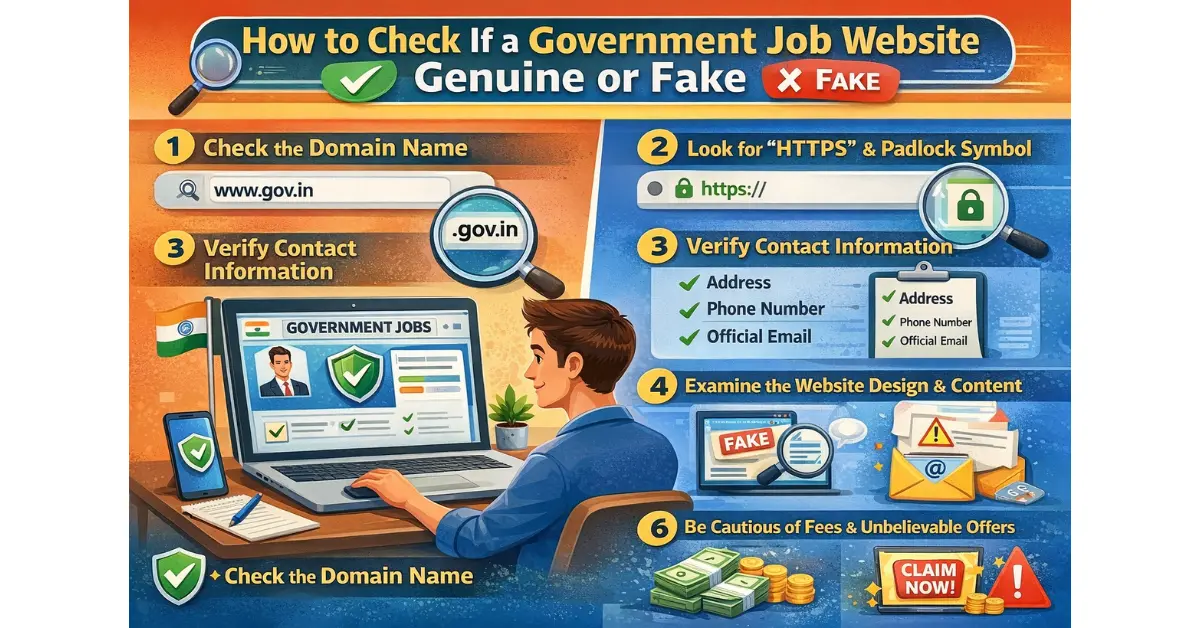
How to check if a government job website is genuine or fake is one of the most important questions every Indian job seeker must ask today. With thousands of websites claiming to offer government job notifications, many aspirants fall victim to fraudulent portals that steal personal data, money, or both. This guide will help you identify real government job websites and protect yourself from online scams.
Why Fake Government Job Websites Are Increasing in India
The rise of fake government job websites in India is alarming. Fraudsters exploit the desperation of job seekers who dream of stable government careers. These scammers create professional-looking websites that mimic official portals to appear legitimate.
Several factors contribute to this growth. First, the massive number of applicants for limited government positions makes job seekers vulnerable. Second, many people lack digital literacy to spot warning signs. Third, creating fake websites has become cheap and easy with modern technology.
Scammers often promise shortcuts like guaranteed selection, leaked question papers, or direct appointments. They collect registration fees, personal documents, and bank details from innocent candidates. By the time victims realise the fraud, these websites disappear without a trace.
Understanding this threat is the first step toward protecting yourself.
Common Signs of Fake Government Job Websites
Recognising fake portals requires careful observation. Here are clear red flags that indicate a website might be fraudulent.
Suspicious domain names are the easiest giveaway. Fake sites often use domains like .com, .in, or .org instead of official .gov.in or .nic.in extensions. They may add extra words to mimic real departments, such as railwayrecruitment.com instead of the official rrc.indianrailways.gov.in.
Poor website design and broken links suggest unprofessionalism. Government websites maintain certain quality standards. If you notice spelling mistakes, low-quality images, or non-functional pages, stay alert.
Requests for money are major warning signs. Genuine government recruitment never asks candidates to pay for application processing, interview calls, or appointment letters. Any website demanding fees through personal accounts, payment gateways, or cash transfers is likely fake.
Lack of proper contact information raises doubts. Official portals always provide verifiable office addresses, phone numbers, and email IDs. Fake websites either hide this information or provide invalid details.
Urgency tactics pressure applicants into hasty decisions. Scammers create artificial deadlines or claim limited vacancies to rush people into paying without verification.
How to Verify a Genuine Government Job Website Step-by-Step
Learning how to verify government job notifications properly can save you from losing money and opportunities. Follow these practical steps.
Check the website domain carefully. Authentic government websites use .gov.in or .nic.in domains. For example, the Union Public Service Commission uses upsc.gov.in, and the Staff Selection Commission uses ssc.nic.in. Any variation from these official domains deserves suspicion.
Visit the official department website directly. Instead of clicking links from social media or emails, type the official web address yourself. Navigate to the recruitment or career section from there. This eliminates the risk of landing on cloned websites.
Cross-verify notifications on multiple trusted sources. Check if the same job notification appears on the Employment News portal, official department websites, and recognised job information platforms. Genuine notifications get published across official channels.
Look for digital signatures and official logos. Government advertisements carry specific formats, seals, and signatures from authorised officers. Examine these elements closely and compare them with previous authentic notifications.
Contact the department directly if in doubt. Use phone numbers or email addresses listed on verified official websites to confirm any recruitment announcement. Government offices respond to genuine queries from applicants.
Read the notification PDF thoroughly. Official job notifications follow standard formats with detailed information about posts, qualifications, application procedures, and important dates. Vague or incomplete information indicates potential fraud.
Check social media verification. Many government departments maintain official social media accounts with verification badges. These accounts often share authentic recruitment updates.
Importance of Official Domains in Government Job Websites
The domain extension makes a critical difference when identifying genuine government job portals. Understanding this concept protects you from sophisticated scams.
The .gov.in domain is reserved exclusively for Indian government entities. No private individual or organisation can register such domains. This restriction makes .gov.in the most trustworthy indicator of authenticity. Similarly, .nic.in domains belong to government bodies registered through the National Informatics Centre.
However, scammers create confusion by using similar-sounding domains. They register names like governmentjobs.com or sarkariresult.in that appear official but lack government authorisation. These platforms might share genuine information mixed with fake notifications to build credibility before executing scams.
Always remember that official recruitment boards and departments conduct hiring only through their designated government domain websites. The Railway Recruitment Board uses indianrailways.gov.in variations, banking recruitments happen through individual bank websites ending in .in or .co.in with proper verification, and state government jobs appear on respective state portal domains.
How Trusted Platforms Help Job Seekers
While staying cautious about fake websites, job seekers also need reliable sources for timely updates and guidance. Trusted informational platforms play a valuable role in this ecosystem.
Genuine information websites compile notifications from official sources and present them in accessible formats. They help users understand complex application processes, eligibility criteria, and preparation strategies without charging unreasonable fees.
For instance, https://skilljobgov.com/ serves as an informational resource that helps Indian citizens learn about government jobs, skill development programmes, and welfare schemes. Such platforms guide users toward official sources rather than replacing them, maintaining transparency throughout.
The key difference between helpful platforms and scam websites lies in their approach. Trustworthy sites educate users, direct them to official portals for applications, and never promise guaranteed selections or ask for payments to secure jobs.
When using any third-party platform, verify that they cite official sources, provide links to government websites, and offer information freely without mandatory registrations or fees.
Mistakes Job Seekers Should Avoid
Even informed candidates sometimes make errors that compromise their safety. Avoid these common mistakes.
Never share sensitive personal information on unverified websites. Details like Aadhaar numbers, bank account information, or scanned documents should only go to official government portals during legitimate application processes.
Do not pay money to anyone claiming to help with government job selection. Merit-based selection processes cannot be influenced by payments. Anyone promising such services is running a scam.
Avoid clicking on suspicious links sent through SMS, WhatsApp, or email. Phishing attempts often disguise themselves as job notifications. Always visit official websites directly by typing their addresses.
Do not ignore your instincts. If something feels wrong about a website or offer, take time to verify before proceeding. Rushing into applications without proper checking leads to regrets.
Refrain from trusting screenshots or forwarded messages blindly. Fake notifications spread rapidly through social media. Always confirm from official sources before believing or sharing such content.
Conclusion
Protecting yourself from fake government job websites requires awareness, patience, and careful verification. Remember that genuine opportunities never demand money or promise shortcuts. Always check official domains, cross-verify notifications, and use trusted information sources wisely.
The responsibility lies with each job seeker to stay informed and vigilant. By following the steps outlined in this guide, you can confidently distinguish between authentic and fraudulent portals. Your dream government job awaits through legitimate channels—approach the journey with both hope and caution.
Stay alert, verify thoroughly, and trust only official sources for your career decisions.
Frequently Asked Questions
Q1. What domain extensions do genuine government job websites use?
Authentic government websites in India use .gov.in or .nic.in domains exclusively. Private domains like .com or .org are not official government portals.
Q2. Do real government job applications require payment?
Most government job applications are free. Some positions may have minimal application fees paid only through official payment gateways mentioned on verified government websites, never to personal accounts.
Q3. How can I verify a government job notification I received on WhatsApp?
Visit the official website of the concerned department directly by typing its address. Check their recruitment section to confirm if the notification exists there before trusting forwarded messages.
Q4. Are job consultants necessary for government job applications?
No, government recruitment follows transparent processes accessible to all candidates. Consultants claiming to guarantee selection through connections are fraudulent and should be avoided completely.
Q5. Where should I check for authentic government job updates regularly?
Check official department websites, the Employment News portal, and trusted information platforms that cite official sources. Always verify notifications from the original government website before applying.
Disclaimer: This article is for informational purposes only. Please verify all information from official government sources before taking action. Procedures and eligibility may vary by state and change over time. We are not responsible for any decisions made based on this content.
