
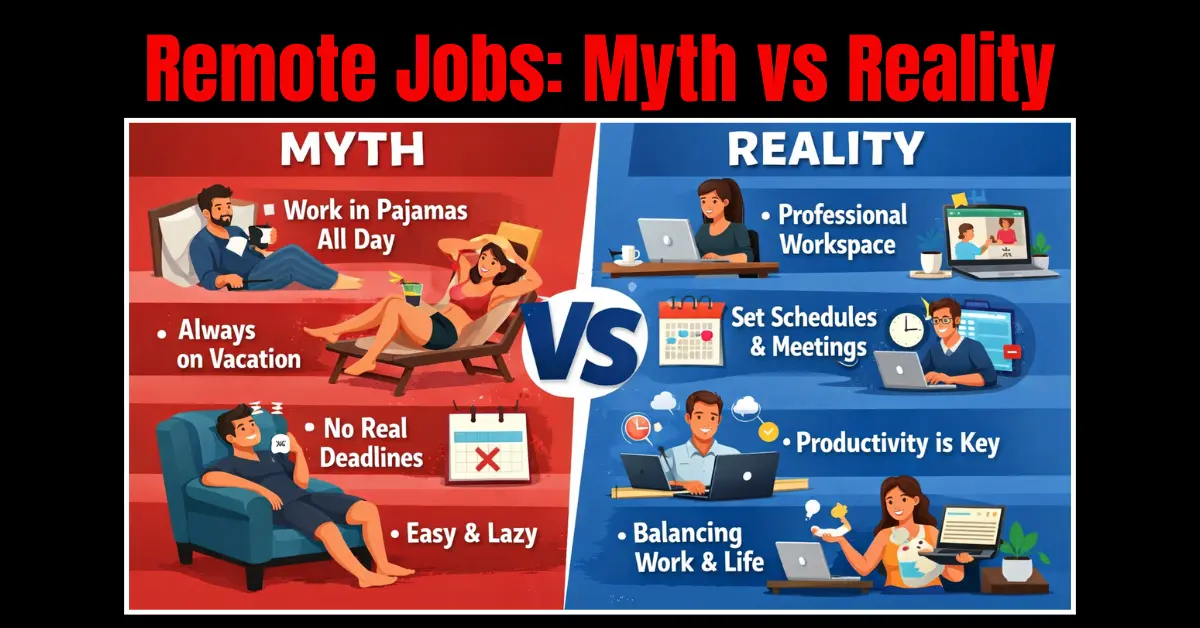
Remote work sounds like a dream working from home, flexible hours, no office politics, and freedom to travel. Social media often paints remote jobs as easy money with minimal effort. But the reality of remote work is far more complex. In 2026, remote jobs are real, growing, and powerful but they are not what most people imagine.
Myth 1: Remote Jobs Are Easy
One of the biggest myths is that remote jobs are less demanding. In reality, remote roles often require more discipline, accountability, and self-management than office jobs. There’s no manager watching over you, no fixed structure, and no one to remind you of deadlines. Your performance is measured purely by output, not attendance.
Myth 2: Anyone Can Get a Remote Job
Many people believe remote jobs are open to everyone. The truth is, remote work is highly skill-driven. Companies hire remote employees who can work independently, communicate clearly, and deliver consistent results. Freshers without skills or experience often struggle to break into remote roles unless they’ve built strong portfolios or practical expertise.
Myth 3: Remote Jobs Mean Flexible Work All the Time
Flexibility exists, but it’s limited. Many remote jobs operate across time zones, meaning odd working hours, late-night meetings, or strict availability windows. Freedom comes with responsibility. You may have flexible locations, but not always flexible schedules.
Reality 1: Skills Matter More Than Location
In remote work, your skills speak louder than your degree or city. Employers don’t care where you live; they care about what you can deliver. Roles in content, design, marketing, development, data, and customer success are especially skill-focused. A strong skill set can open global opportunities without relocation.
Reality 2: Communication Is Critical
Remote work runs on communication. Clear emails, timely updates, video calls, and documentation are essential. Miscommunication can quickly affect productivity and trust. Professionals who communicate well often grow faster in remote environments than technically strong but silent workers.
Reality 3: Isolation Is Real
Working remotely can feel lonely. No office interactions, casual conversations, or team lunches. For many, this isolation affects mental health and motivation. Successful remote workers intentionally build routines, social connections, and work-life boundaries to stay balanced.
Reality 4: Performance Is Always Visible
Remote jobs operate on results. There’s little room to hide behind long hours or busy appearances. Your work is tracked through tasks, deadlines, and outcomes. This can be stressful, but it also rewards high performers who consistently deliver value.
Reality 5: Remote Jobs Are Competitive
Remote roles attract candidates from across the world. You’re not competing with people from your city, you’re competing globally. This raises standards but also pushes professionals to continuously upskill and improve.
Conclusion
Remote jobs are neither a shortcut to success nor a work-free lifestyle. They offer freedom, global exposure, and flexibility but only to those who bring discipline, skills, and accountability to the table. The myth is comfort; the reality is responsibility.
Remote work is not for everyone, but for those who adapt, it can be one of the most rewarding career paths of the future.
